
Staring at a D-Grade Warning on My Phone: My Real-World Shift to Smart Estimation and Learning How to Improve Academic Performance
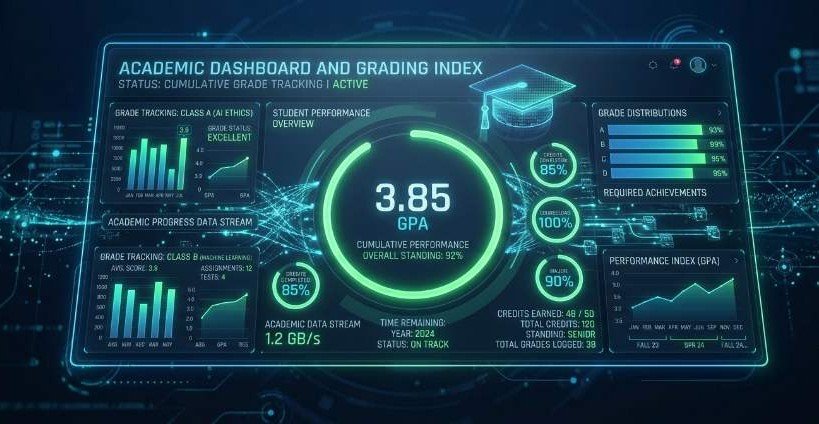
improve academic performance . I still remember the absolute knot of anxiety that twisted in my stomach early on a Monday morning during my third semester, staring down at a digital report banner displaying a clear academic probation alert—a sudden wake-up call that forced me to completely rethink my strategy to improve academic performance.
I had just completed an exhausting twelve-hour driving shift the previous night, my eyes were burning from scanning dark highway lanes, and I expected my weekend study blocks to reward me with a stable transcript layout.
Instead, a series of sloppy tracking errors, missed assignment deadlines, and poor midterm averages combined to drop my cumulative score right down to a dangerous threshold.
Staring blankly at a cold smartphone screen while tracking your educational parameters using only a single end-of-term grade sheet is a highly frustrating bottleneck that completely drains your mental focus.
That academic crisis forced me to throw away my old notebook logs, cancel my unproductive study routines, and search for lightweight browser-based tools that predict grading variables automatically.
The harsh reality of modern university life right now is that waiting for your final official report card to check your standing is an obsolete strategy.
Most everyday learners assume that if they simply sit through long lectures and reread thick textbooks the night before a final exam, they will automatically secure a premium transcript and build a stable professional career profile.
But that passive study framework completely hides small daily performance drops, compounding quiz errors, and credit weighting mistakes that completely ruin your overall standing behind the scenes.
That transcript panic forced me to throw away my old assumptions and study exactly how to deploy advanced academic forecasting matrices across my personal dashboard.
If you want to protect your graduation timeline, secure premium merit scholarships, or balance your daily study energy, changing your operational baseline is vital.
Learning exactly what it takes to improve academic performance parameters across your semester does not demand costly private home tutors or complex institutional software packages.
You just need to throw out the lazy estimation habits that turn your student journey into a stressful numbers game and replace them with fast, responsive browser utilities.
Let us examine closely how utilizing dedicated layout assistants preserves your processing speed and how you can access high-strength data channels with zero software expenses.
To study the formal development of modern grading scales and learn how collaborative credit allocation matrix algorithms optimize learning tracking across public networks, you can explore the technical papers inside the Wikipedia Academic Grading Systems Archive.
The Core Danger of Grade Blindness and Why Students Must Improve Academic Performance Early
When I first sat down to analyze my crumbling course structure, I discovered that my biggest mistake was relying entirely on my own memory to estimate my final scores.
Humans are creatures of habit, meaning we naturally default to comfortable, simple guesses that we can easily make without any extra effort or mathematical analysis.
When your educational tracking contains only raw percentage guesses without factoring in specific credit weightings, you are giving hidden assessment errors a massive advantage over your actual grades.
Automated dictionary engines can easily run through simple numbers, but a student’s brain frequently miscalculates how a low quiz mark impacts a massive four-credit core subject.
Another massive structural trap is utilizing the exact same generic study templates and loose scheduling layouts copied from unverified public student discussion forums.
If a random study plan or intense overnight cramming routine you found online fails to account for your unique energy parameters, your concentration drops right away.
Your retention speed slows down, your analytical clarity gets sacrificed, and your brain enters a state of severe mental burnout that completely ruins your daily exam performance.
A single weak point in your personal preparation network can trigger a devastating domino effect that completely drains your grades in minutes.
Shifting my operational baseline over to a specialized generation script completely solved this educational threat.
When you utilize a smart webpage script like a local CGPA Calculator, you eliminate human guesswork entirely from the calculation loops.
The software builds completely custom, proportional grade matrices that provide clear structural clues regarding your actual target goals.
It creates an objective security barrier, ensuring your academic tracking stays completely resilient against temporary exam setbacks or confusing credit distributions.
Step-by-Step Security Blueprints to Improve Academic Performance Safely
Building a streamlined, high-speed digital study station does not require premium monthly software packages or advanced computer engineering backgrounds.
You can easily fortify your entire digital footprint and learn how to improve academic performance benchmarks by executing these four practical steps inside your browser layout: [1]
Step 1: Establish Your Proportional Baseline via Local Grade Calculators
Instead of guessing your semester results, drop your credit hours and predicted grade values directly into local browser text blocks.
A clean utility like a CGPA Calculator reads your dimensional structures in real-time, clearing out guesswork and identifying your true grading bracket instantly within your active tab. [1]
This simple adjustment lets you format professional study goals, tracking plans, and assignment schedules perfectly without hitting premium paywalls or mandatory membership walls.
Step 2: Use Local Text Polishers to Polish Your Research Reports
Never waste your precious evening hours trying to format complicated academic essays, reference citation strings, or project outlines manually inside messy notebooks.
Drop your text notes into a clean browser editor or run them through an AI Grammar Checker to keep your syntax rules clean and readable.
This processing track ensures that your descriptive paragraphs, reference tables, and assignment summaries stay perfectly formatted, helping you avoid manual typos in your final essay submissions.
Step 3: Streamline Your Presentation Media Using Browser-Based Compressors
When you are compiling digital research portfolios, uploading video assignments to campus portal repositories, or sharing training clips with group project members, file size limitations are a constant hurdle.
Run your raw visual assets through a dedicated Video Compressor or a digital image layout adjuster before hitting the upload button.
These lightweight scripts strip out invisible data layers from your MP4 or PNG files, lowering your file sizes drastically while keeping your visual clarity completely sharp for grading reviewers.
Step 4: Isolate Your Educational Portals with Unique Random Keys
Managing multiple university student portals, library database logs, and academic discount accounts safely requires distinct, unbreakable keys across every single website log-in.
Avoid using the same basic password mixed with your birth year across your learning dashboards, as a single network breach can compromise your entire student identity.
Run your configuration keys through a smart webpage script like a local Password Generator to build highly complex character matrices that protect your data from brute-force hacking scripts.
Common Operational Traps That Block Academic Success Metrics
Throughout my journey rebuilding my digital educational infrastructure, I discovered that some of the most common study advice given by legacy web platforms is actually counter-productive.
For instance, forcing yourself to complete extreme, sleepless forty-eight-hour cramming sessions right before a final exam usually causes your brain to enter a lazy processing state just to preserve energy.
Writers end up just altering their rest patterns too drastically, which does absolutely nothing to help retain complex engineering concepts and instead destroys their cognitive focus during the test.
Always avoid sudden study extremes and stick to steady, progressive daily review adjustments that protect your active memory retention.
Another massive mistake is letting your standard desktop web browser save your highly sensitive personal profiles, assignment logs, and email keys inside its default cache for convenience.
While hitting “remember login” on a browser pop-up box speeds up your daily navigation, it exposes your unencrypted files to deep local device tracking loops.
If a malicious malware script slips into your hardware system via a sketchy file link or email download, it can instantly extract your entire browser credential history in a split second.
Always restrict your browser memory paths and utilize separate, encrypted vault software to shield your personal records.
To study the historical evolution of digital educational standards and understand how data system accessibility improves domain visibility, you can explore the guidelines inside the NIST Educational Technologies Resource Center.
Explore More Utilities on Tanveer AI Tools
If you want to speed up your everyday business calculations and keep your digital content creation completely unblocked, make sure to explore our other free assistants:
- Visit our main Online Calculators directory hub to access our automated interest, EMI, and tax tools.
- Try our Age Calculator to check your exact birth milestones and timeline instantly.
- Open our main AI Tools Collection page to view all our browser-based text and graphic utilities in one place.
Frequently Asked Questions About How to Improve Academic Performance
What factors ensure you choose an objective framework to improve academic performance?
Your evaluations become exceptionally reliable when you stop looking at individual assignment scores and combine your grades with proportional tracking tools like a grade matrix test.
Tracking consistent daily study hours, utilizing local citation checkers, and analyzing credit point weights creates an objective data array that completely defeats seasonal exam panic.
Can an online cumulative calculation script change my official institutional grades?
No, a standard index script utilizes your raw input numbers and credit targets to display your predicted tracking values instantly on your screen layout.
To alter your actual institutional transcript layout or correct an entrance error, you must submit your official documentation sheets to your university administration office manually.
Is it safe to save my private semester grades inside a free online utility?
Yes, as long as the tool utilizes local client-side processing, meaning your entries are calculated entirely inside your own browser window using JavaScript.
Because no data is ever transmitted, stored, or logged on an external web server, your personal academic statistics and grading parameters remain completely secure and isolated from tracking.
Can I run these advanced grade optimization scripts smoothly on an old mobile phone?
Yes, absolutely. The entire interface grid features a highly responsive, mobile-first design architecture, ensuring that the background scripts execute
smoothly across old smartphone processors, tablets, and low-spec laptops without causing device overheating or network buffering delays.
smoothly across old smartphone processors, tablets, and low-spec laptops without causing device overheating or network buffering delays.
Final Thoughts on Designing a Frictionless Academic Setup
At the end of the day, maximizing your educational performance is all about cutting out unnecessary structural waste and letting clean code blocks handle the hard math.
You do not need a massive corporate bank account or premium software packages to produce high-quality tracking sheets, manage accurate research logs, or secure your student identity online.
Moving your everyday administrative tasks to automated browser scripts keeps your tracking lightning-fast, highly accurate, and completely cost-free.
Keep your data short, protect your visual contrast lines, and leverage lightweight processing tools to focus your valuable time on what truly matters: growing your project and moving your life forward